The Insightful Way™ — Community Engagement Series
Thousands of services exist. Events happen every week. Programs sit open. And still — the people who need them most never walk through the door. Not because resources are missing. Because engagement is missing. Connection is missing. The warm hand that walks someone from where they are to where they need to be — that is missing.
"Engagement Is The First Intervention™"
Watch · The Chair Conversations™
The Problem
It is not a treatment gap. It is not a resource gap. It is an engagement gap — and sitting underneath it is a connection gap. People are surrounded by programs and still isolated from the help those programs provide. The system keeps building services. Nobody is building the bridge.
What Exists
Treatment programs. Recovery coaches. Peer support lines. Community health centers. Thousands of services.
What Is Missing
The engagement that gets someone there. The connection that makes them trust it. The human who walks with them. The bridge.
What The System Does
Waits for people to walk in. Puts a flyer on a telephone pole. Holds an event and calls it outreach. And wonders why seats are empty.
What The Chair Does
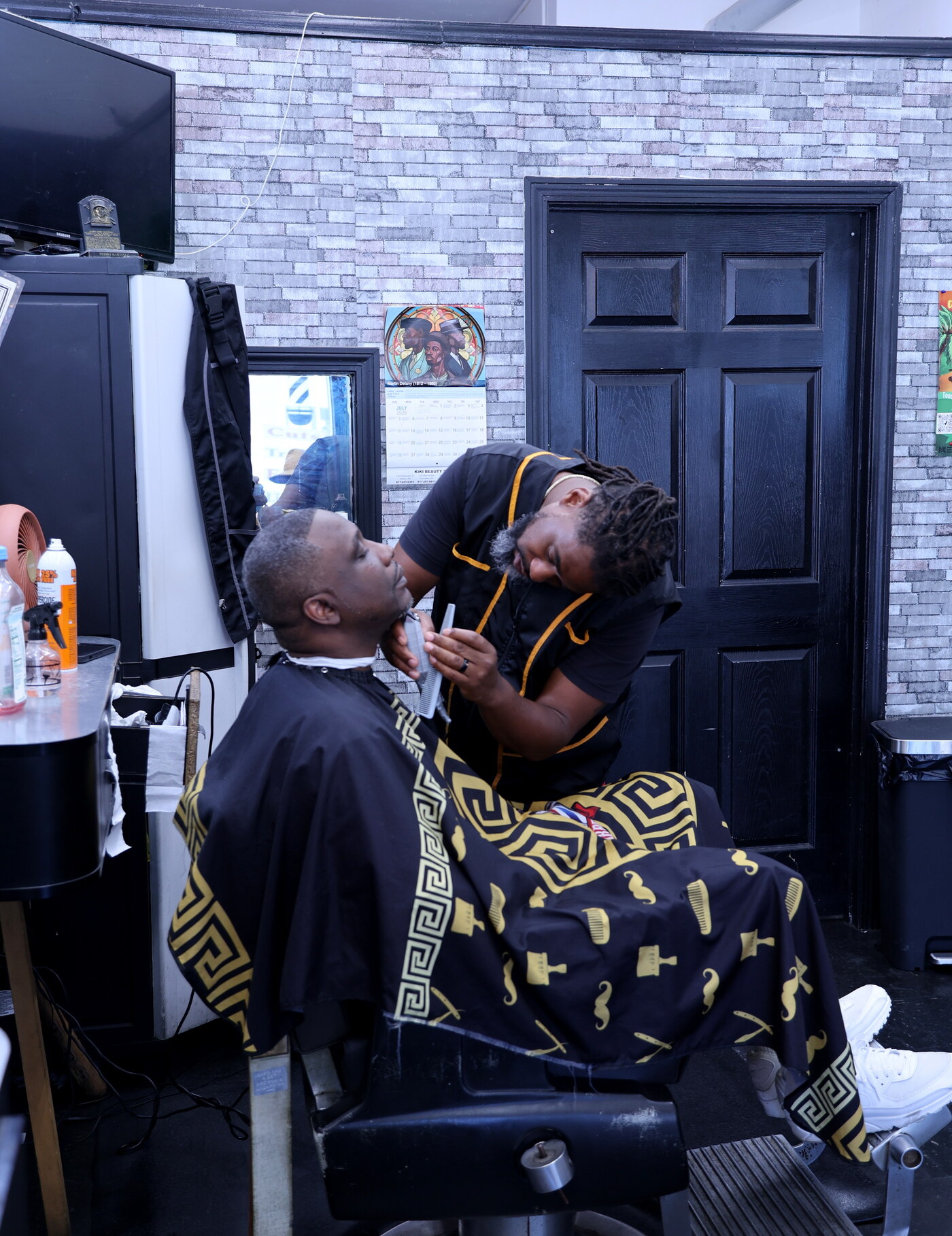
Goes where people already are. Opens a real conversation. Creates connection. Then makes a warm handoff — and when it matters, accompanies. That is the model.
The Model
The Chair Conversations™ is built on a sequence that most programs never complete. Every session is designed to move people through all four — in a space they already trust, on their terms.
01
Engagement
Before treatment. Before housing. Before any system touches a person — someone has to engage them. That is the first intervention.
02
Connection
Not a referral. Not a flyer. Genuine human connection — the kind that makes someone feel seen before they feel helped.
03
Warm Handoff
A direct, human-to-human transfer to a resource. Not "call this number." Someone who knows someone, making the connection real.
04
Accompaniment
Going with someone — not just pointing the way. The presence that turns a referral into an arrival.
What This Is
Six structured conversations designed for barbershop and beauty salon settings — built for any community that gathers in a chair. Each session stands alone. No order required. No workbooks, no clipboards. Just a facilitator, a question, and the room.
The Chair Conversations™ is a deployment of The Missing Engagement™ — a framework built on one governing principle: the community is not waiting for programs. Programs are waiting for the community. The chair is where the community already lives.
Intentionally designed for the full community — men and women, across generations — because the people struggling are never the only ones affected.
"They don't have a treatment problem. They have an engagement problem."
Six Sessions — The Curriculum
Any session runs in 20–45 minutes. The facilitator opens with the hook question, holds the space, and closes with a resource bridge. Whether it's a trained professional or a barber running it solo — the curriculum works the same way.
Opens the series by naming the silence. This session creates permission to talk — about what people have seen, what they carry, and why the conversation has been avoided. No diagnoses. No labels. Just the room telling the truth.
Talk About
Normalize
Bridge To
Facilitator Questions
This session reaches the people who aren't struggling themselves but have watched someone they love go through it. Brothers, fathers, sons, mothers, daughters, friends. It creates space for the grief, the anger, and the helplessness that comes from loving someone in active addiction.
Talk About
Normalize
Bridge To
Facilitator Questions
Most people's mental image of recovery doesn't look like them, doesn't sound like them, and doesn't live where they live. This session dismantles the narrow picture and replaces it with the full reality — that recovery is happening in this city, in this neighborhood, possibly in this room right now.
Talk About
Normalize
Bridge To
Facilitator Questions
This session goes beneath the behavior to the pain underneath it. Trauma, stress, grief, survival. It shifts the room from judgment to understanding — and opens the door for people to acknowledge what they've been carrying, sometimes for decades.
Talk About
Normalize
Bridge To
Facilitator Questions
Testimony is the oldest intervention. This session makes space for stories of survival and return — people who went through addiction and came out the other side. It builds hope through lived proof, not statistics. The room becomes the evidence that recovery is possible here, for people who look like this, from places like this.
Talk About
Normalize
Bridge To
Facilitator Questions
The closing session shifts from conversation to collective ownership. It asks the room to move from witness to stakeholder — and plants the idea that community response to addiction is not a government program. It is a decision people make together. This session turns the chair into a hub.
Talk About
Normalize
Bridge To
Facilitator Questions
Facilitator Guide
The hook question is your only required tool. The rest is presence, attention, and knowing when to let the room breathe.
Before You Start
Running The Room
When It Gets Real
Documenting What Happened
Who Is Behind This
Founder
Insightful Recovery Solutions LLC
Nearly 30 years of community engagement experience — predating every credential, every institutional role, every published framework. NIH co-authorship through Project CHORUS at Boston Medical Center. Documented community engagement at scale through Massachusetts DPH's Bureau of Substance Addiction Services, where Virtual Community Office Hours reached 500+ unique registrants.
"The Chair Conversations™ is the barbershop deployment of The Missing Engagement™ — a framework built from lived intelligence, not institutional theory."
Four sessions. Two months. The first documented addiction engagement series in a Boston barbershop — Flipping Clippers, 483 Washington St, Dorchester. The proof of concept for a model that scales.